BOOK · 2018 · Research
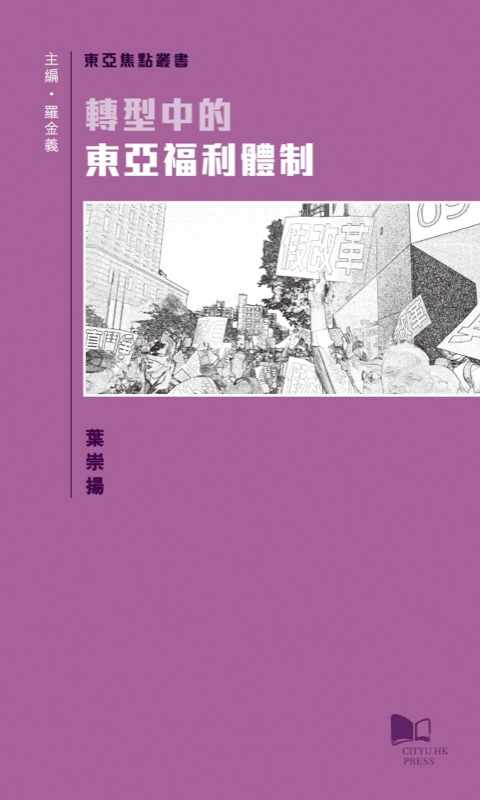
A Comparative Study of East Asian Welfare Regimes
轉型中的東亞福利體制
BOOK · 2018 · Research
轉型中的東亞福利體制
Synopsis ・ 內容簡介
This book takes Taiwan, Japan, Singapore, South Korea, and Hong Kong as comparative cases to investigate why these East Asian societies have followed strikingly different welfare-regime reform pathways during their political-economic transitions.
Earlier "East Asian welfare regime" scholarship has often relied on single-frame concepts — Confucian culture, the developmental state, productivism — to cover the entire region. Such framings obscure the substantive differences in capitalist varieties, political systems, and labour-capital structures that distinguish these societies from one another. This book takes a comparative historical-institutional approach, returning to each case's specific historical context to reconsider why institutional paths diverge.
Through cross-territorial comparison, the book interrogates the limits of the standard "East Asian welfare regime" perspective and proposes a more granular diversity thesis: East Asia is not one regime, but a constellation of developmental pathways.
Table of Contents ・ 目錄
Note: The book is published in Traditional Chinese; the English titles above are the author's translations of the original chapter headings.
Author ・ 作者
Citation ・ 引用